
Everything We Claim to Value
What a gemstone and a Rolex reveal about what we actually value

Treasure
I hold in my hand what may be the only one of its kind in the entire world.
An unexpectedly large, marquise-cut, light yellow-green, nearly eye-clean Euclase. You don’t need to know what that is to appreciate this article. Stay with me, I’ll show you.
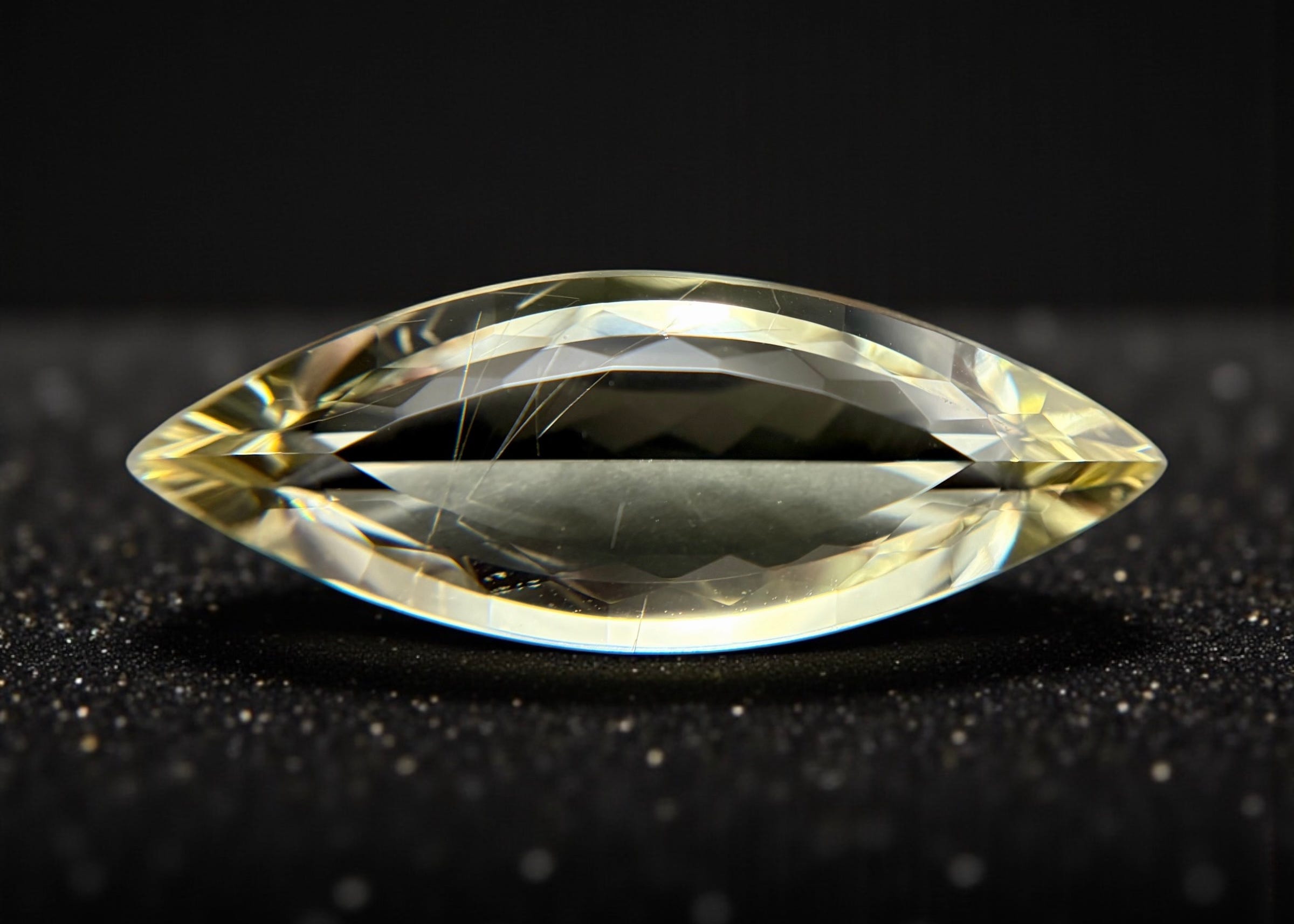
Thirty-four carats. It feels cool against my skin, as it should. Natural crystal conducts heat away from the body rapidly, creating the sensation. This is a work of nature and skilled hands that should not exist. It is a small miracle that it does.
Everything we claim to value in a possession is present in this gem.
Easily Broken
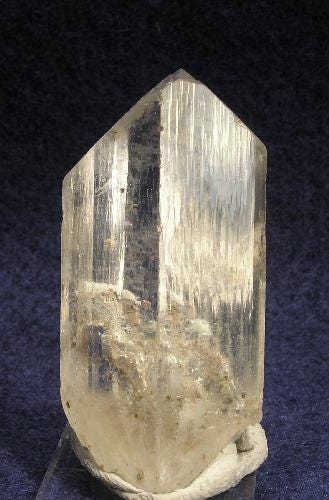
Euclase is an exceptionally rare mineral formed when beryl — the mineral family that includes aquamarine and emerald — decomposes under heat and pressure deep in the earth. If you associate aquamarine with rarity and beauty, think of euclase as its far more elusive cousin. It was first described in 1792 by René Just Haüy, a French priest and the son of linen weavers who is now considered the father of modern crystallography. Haüy named it from the Greek — eu, easily, and klasis, fracture. The mineral is named for how easily it breaks.
The geological systems that produce Euclase are typically between 500 million and 1.5 billion years old. The crystal likely grew over thousands to tens of thousands of years within that window.
A billion-year geological setup. A hundred-thousand-year window of crystallization. Named for its own fragility.
Euclase has perfect cleavage along one axis. This means the crystal can split cleanly and catastrophically along a single plane with minimal force. A wrong vibration during cutting and the stone is destroyed.
Mining it requires care.
Cutting it requires nerve.
A marquise cut maximizes the visual impact and yield of an elongated crystal. It also maximizes exposure to the cleavage plane. Every facet placement on this stone carried real risk of total loss. The lapidary who cut it chose the most demanding shape for the most unforgiving material and executed it at a size most cutters will never encounter, let alone attempt. That is a lifetime of acquired skill expressed in a single act of precision.
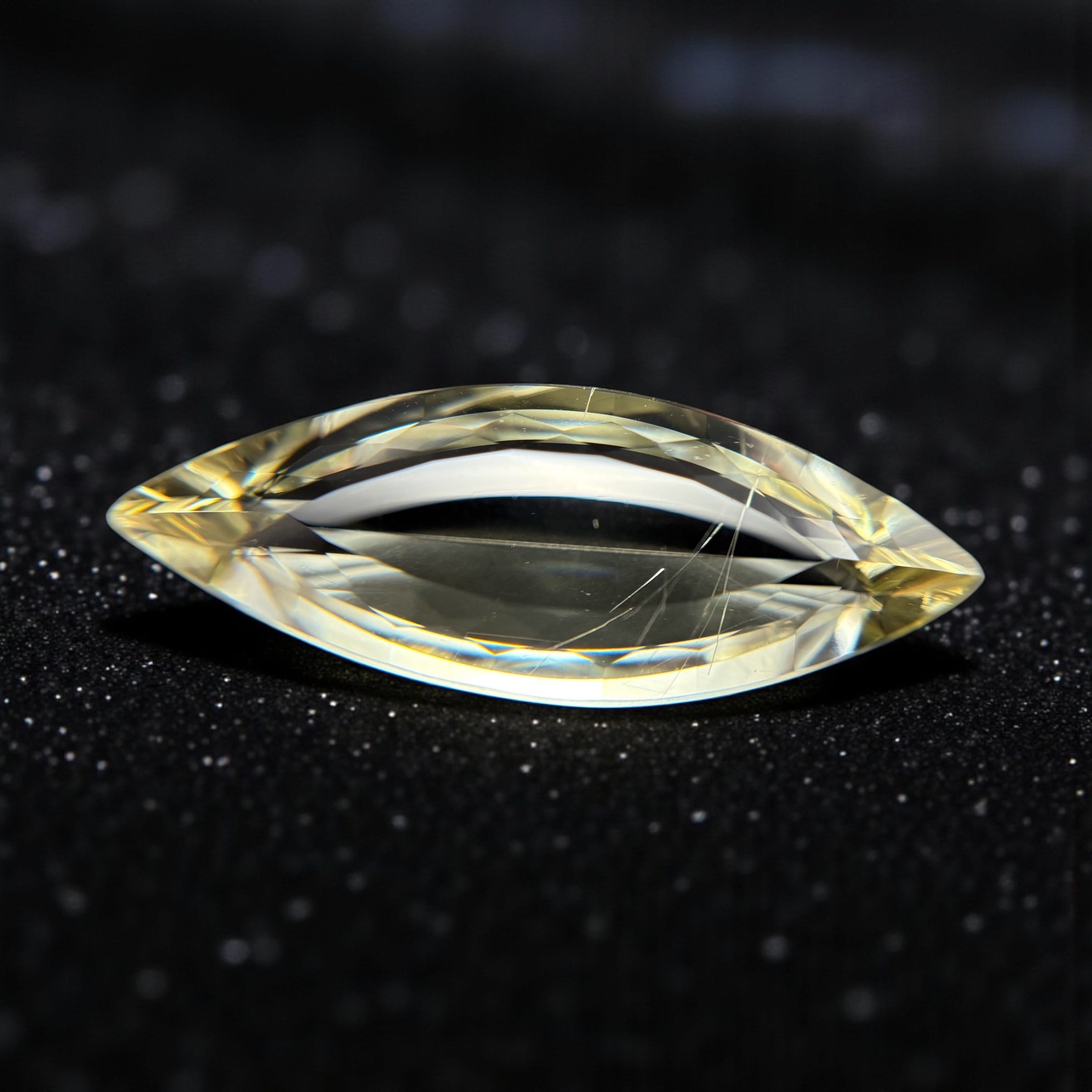
Every object tells a story. Value follows the telling. What do you think such a gem should be worth?
The Telling
Hans Wilsdorf founded Rolex in 1905. He was an orphan from Bavaria who believed the wristwatch would replace the pocket watch when the entire industry thought he was foolish. His belief proved right.
He solved problems the Swiss watchmaking establishment considered unsolvable. The Oyster case in 1926—the first reliably waterproof wristwatch. The Perpetual rotor in 1931—the first reliable self-winding mechanism. Real engineering. Real breakthroughs. Then he strapped the Oyster to a swimmer crossing the English Channel and took out a full front-page ad in the Daily Mail the next day.
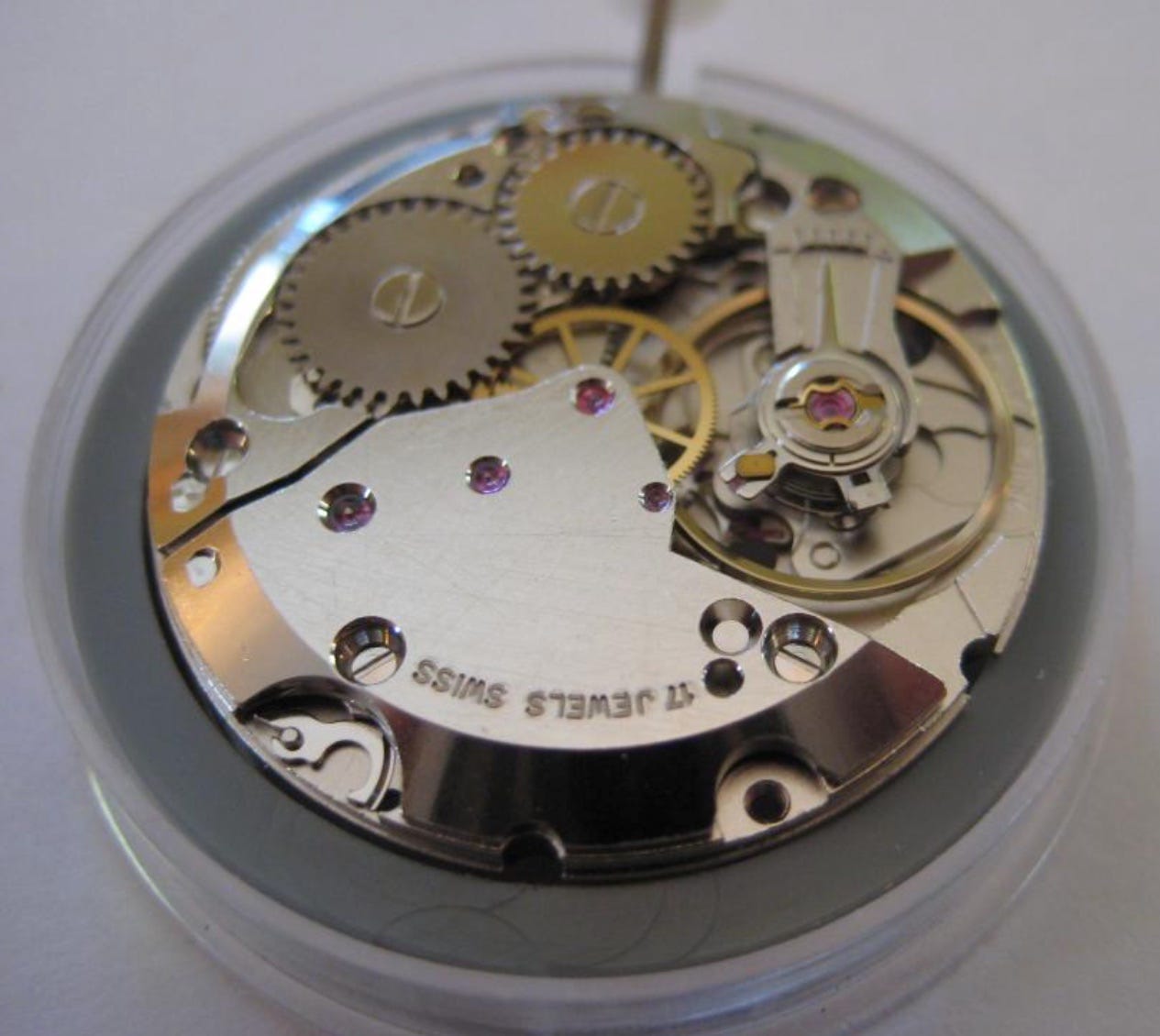
He put Rolex on the wrists of mountaineers summiting Everest and on the hull of a bathyscaphe descending into the Mariana Trench. Wilsdorf earned his story. He built something genuine, then built the infrastructure to make sure the world knew it.
It is a good story. It is a hundred and twenty years old.
The Euclase tells a longer one.
It tells a story of transformation, beginning with the earth cooling. Silica-rich fluids find the rare element, beryllium, in the dark. A crystal lattice assembles itself one atomic layer at a time in conditions that will never recur in exactly this configuration. It tells the story of endurance — a structure that survived tectonics, pressure, and deep time intact. Of precision — a cutter who looked at a mineral named for how easily it breaks and chose the shape most likely to break it. And then didn’t. Of achievement — a result so improbable that most gem dealers will never see its equal in a lifetime. It does not have a marketing department. It does not have a front-page ad. It has no story — because no one has told it. So few exist that acquiring one is less a feat of skill than of luck. And no one builds recognition infrastructure around something they cannot reliably or readily acquire.
Rarity. We say we value it.
Patience. We say we value it.
Skill. We say we value it.
Care. We say we value it.
The Watch
Yesterday I held a GMT-Master II “Pepsi” in my hand. Pre-owned. Excellent condition. Thirty-three thousand dollars. A stunning timepiece. The bezel vibrant blue and red ceramic, platinum-filled Arabic numerals at every even hour from two to twenty-four. It was heavy. A weight that felt commensurate with the value ascribed to it. Sleek Oystersteel. An investment piece that can also be worn daily and recognized almost instantly. One of thousands. A feat of human and machine engineering. Reproducible. Replaceable. Recognizable.
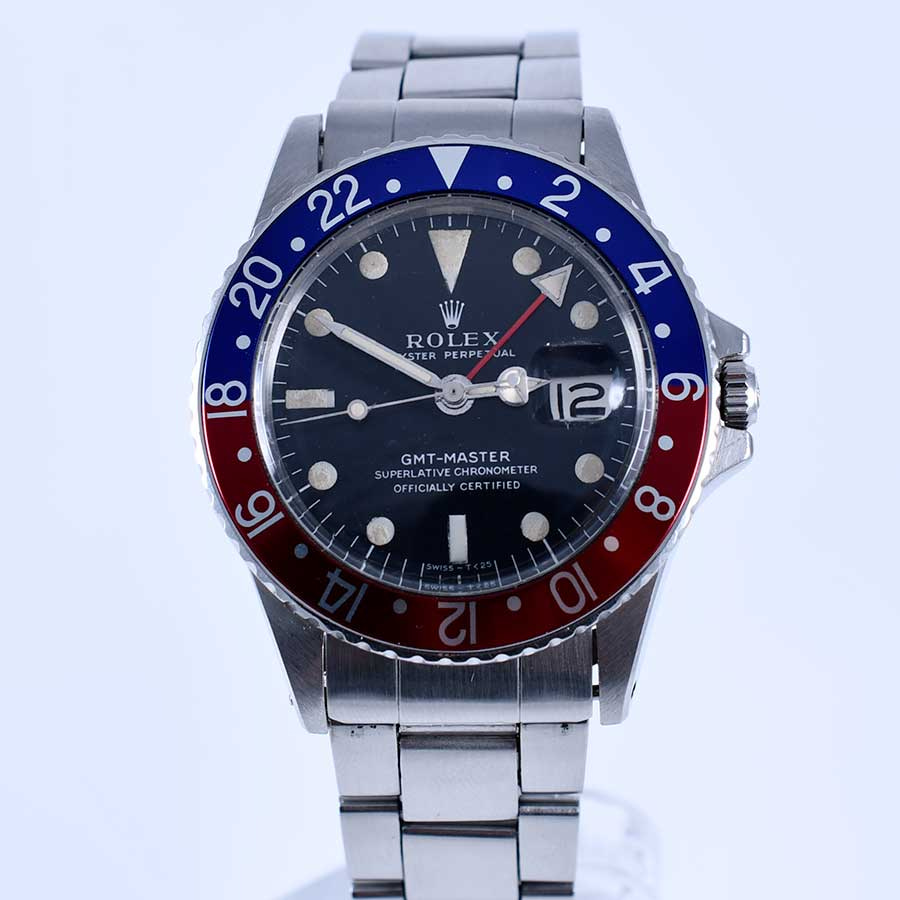
I bought my euclase at auction.
Three hundred and sixty dollars.
A billion years. A crystal that grew in silence beneath the earth for longer than complex life has existed on its surface. A cutter’s hands, steady enough to shape a stone that would shatter under almost anyone else’s. A result that is, in all likelihood, singular.
What We Pay
A Rolex keeps time. So does your phone. So does a fifteen-dollar quartz watch from a gas station. The euclase can be set in precious metal and worn. It can be displayed. Its hardness rivals sapphire. It has no moving parts to service, no gaskets to replace, no mechanism to fail. The watch will need maintenance every decade for as long as it exists. The stone will outlast it by a margin measured in epochs.
The watch has a price because we built a system to recognize it. The stone does not because we didn’t.
Neither of these objects is necessary. You can live a full life without owning either one. A fifteen-dollar watch keeps time. A phone keeps time. No one needs a thirty-three-thousand-dollar timepiece. No one needs a thirty-seven-carat euclase. We buy these things because of what they mean to us. Because of the story they tell about who we are, what we value, what we want the world to see when it looks at us.
One of these objects tells a story the world already recognizes. The other tells a story the world has never heard.
I hold the stone in my hand. I watch light dance as it moves through its lattice. I notice its imperfections. I photograph it. I write about it. I share it. This is a fraction of what I invest in the things that matter most to me — and none of those things have a marketing department either.
Where we put our time and money is what we actually value. Everything else is just what we say with our mouths.
Anthony is the real gem. 💎 I love his art and writings.