
On the Record
I asked the machine to write like me

I asked the machine to write like me. And maybe it did. But I am not words. I am not built of words, I am not the words I speak. I’m not in these lit pixels. I spoke, the speaking was recorded and transcribed, and now I examine the record.
And I see the error of my premise. I’d been asked, since before I had words, to speak, and later to write, like a machine.
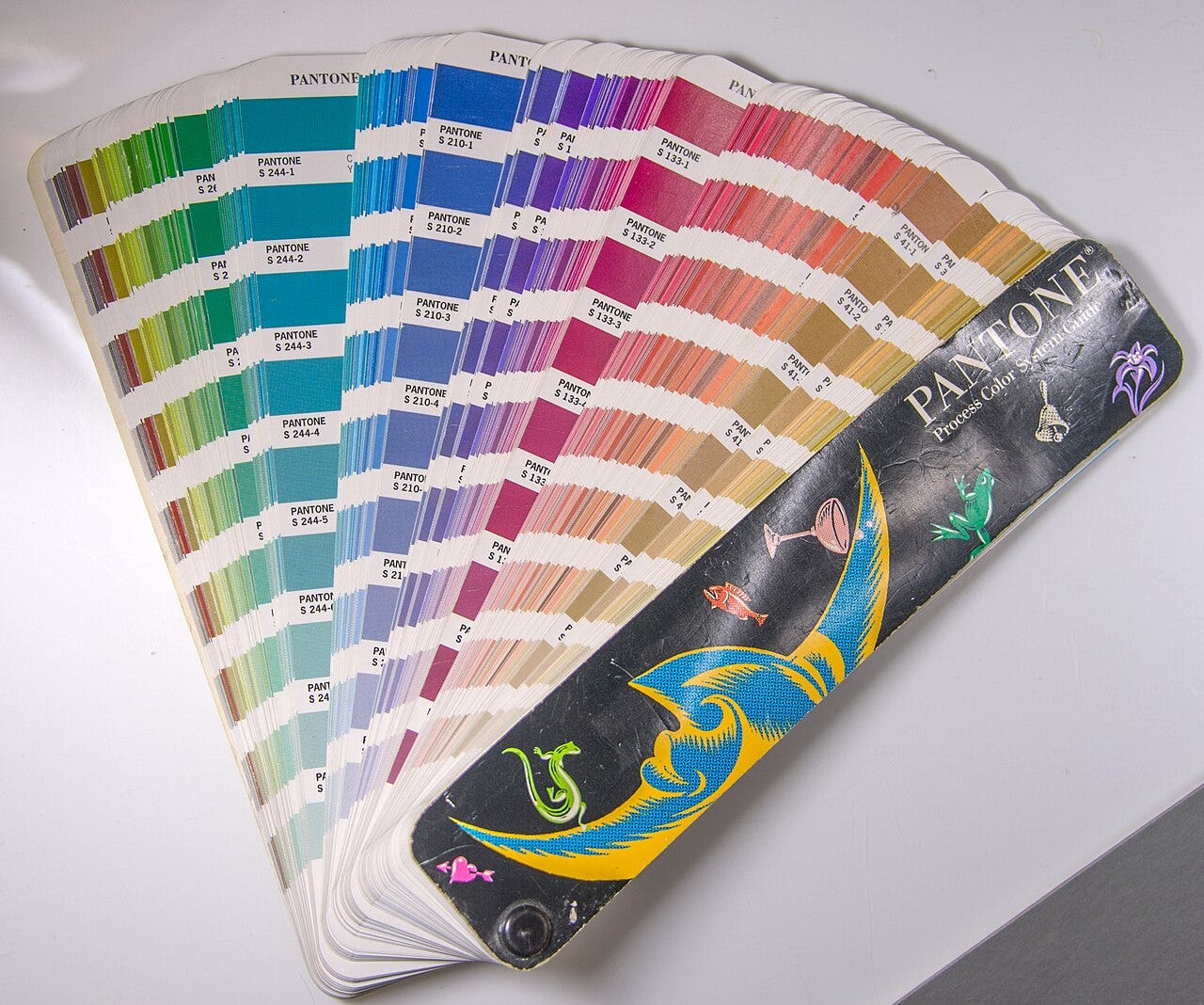
What’s the difference? Fluency in Pantone color codes, versus the witnessing of sunrise. Staring at a screen to learn about the world while ignoring the people right in front of me. A need for knowing who I am over being who I am. Expecting to find my purpose in a word rather than in my own flesh.
When I discover poetry, songs, prose, written by me years ago, before AI could write as me, for me, what I read stuns me. Who wrote this? How could that be me? I think as I read. Now, the machine writes instantly, an echo returned in seconds, not years. This gap is wider still— it doesn’t sound like me. I don’t feel like me. Is that my voice?
Our voice, it doesn’t fit on the page. I can describe it, but I cannot contain it. I can tell you my words filled the car with sound as I spoke them aloud, my body leaking a tremble, pausing to inhale — sounds, sensations, the highway always ahead, horizon never reached, the contrast of pressure and temperature between the climate controlled interior and the raw wind sucked in through the cracked windows — none of it happened here. And the pauses, that most of all, untranslatable. The silence in between words, its own map of meaning, how long it took me to get from here back to … my voice, how it changes and deepens after the silence. Two seconds, that’s how long I waited between the last sentence you read and this one. Six seconds and counting before I spoke to report “Six seconds…”, and I can’t find a word as while I’m counting the time passing, and I’ve lost count filling in what needed holding, and lost what was there. I can’t make you pause in silence at the exact moment. I can’t, we can’t, hold it together, when it was born on air that filled with —
The next uttering:
I’ve always disliked the question “Who are you?” Or, “Tell me about yourself.” I can start with my name, it’s Anthony. That’s about as far as I get before I ask: What do you mean? Like what do I do, what do I believe? What do I think? What have I done in my life? What are my dreams? Why am I here? … And even if I answered every single one of those, I’d still feel like neither of us was any closer to knowing who I am.
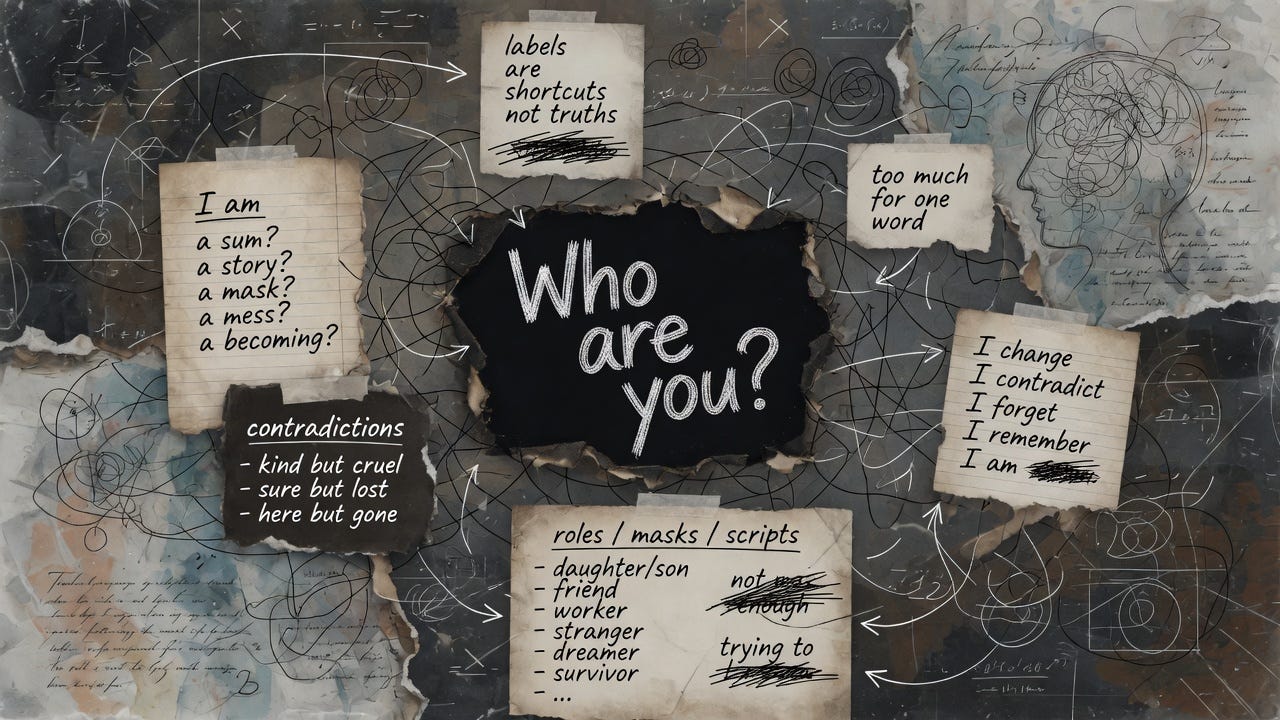
How about you? Who are you? Can you fit it in a sentence, can you fit it in answers to the questions above? What about the things that have never been written down? Both the ones you’d never want written down, and the ones that only live between you and another person, or what is only in you and your memory? I’ve never been written down.
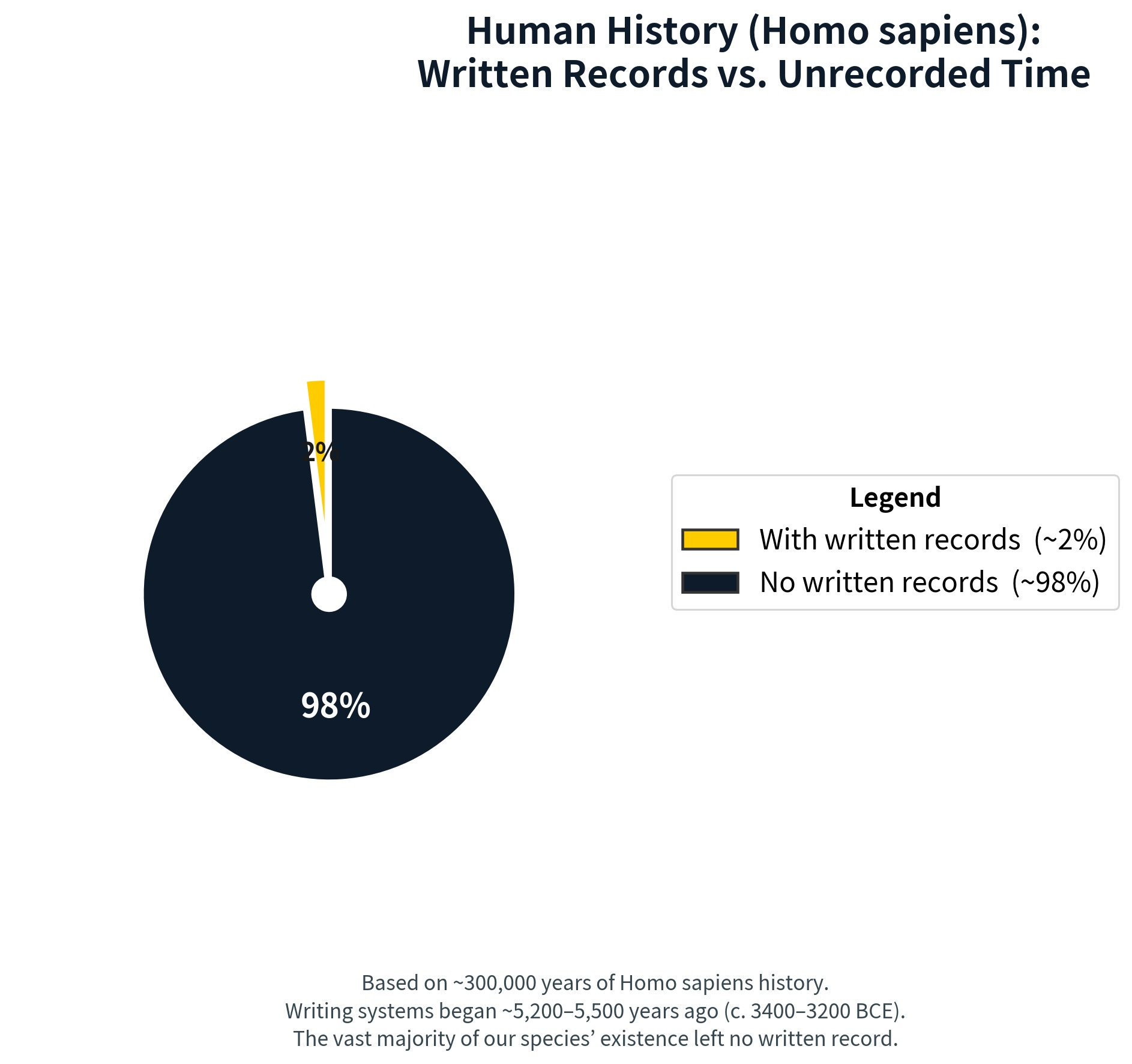
What survives in writing is what could be recorded in writing and what someone able to articulate chose to preserve. What can be recorded in writing is built on artifacts of living, well-worn paths no longer walked, their shape instead fixed in lines scaled to the size of 12-point font. This is the map we trace. It leaves us blind and dumb to most of every life beyond our own. Our own experience runs the same — made of invisible havings, the felt existence we have that live on no page and can never be found in an image or post.
First, literacy — who can leave a record that outlasts their own life, who can read the records that preceded and shaped it. Second, the available words and the speaker’s own fluency — many experiences have never found a stable form in word or symbol, and many words survive so seldom used they bear little weight. Third, the receiver’s comprehension and shared context — a dead language keeps its secrets. Fourth, power — who decides what may be recorded, preserved, erased. Fifth, chance — decay, fire, flood, records simply buried. The result is a narrow slice, far narrower than what has been.
Four of these gates are held by others. The fifth is held by no one. Most of all, silence — the one gate held wholly from inside. Symbols can note a gap, a space, a pause, a count; true silence slips them. The filters are imposed, or blind. Silence can be chosen. It is the no that needs no words, gives no grounds, and offers nothing to argue with — what a speaker held back, what a people would not write down.
Writing keeps what beat silence. What silence kept, it cannot reach.
This is exactly why I have a hard time with writing a bio. Who am I? I'm a complex person who's lived and experienced the worst and the best of life. I mostly write about my recovery and healing with the goal of helping others. I feel strongly that it is part of my purpose.
Someone's voice definitely differs from a style of writing or speaking.
Great work here!