
Think Inside the Box

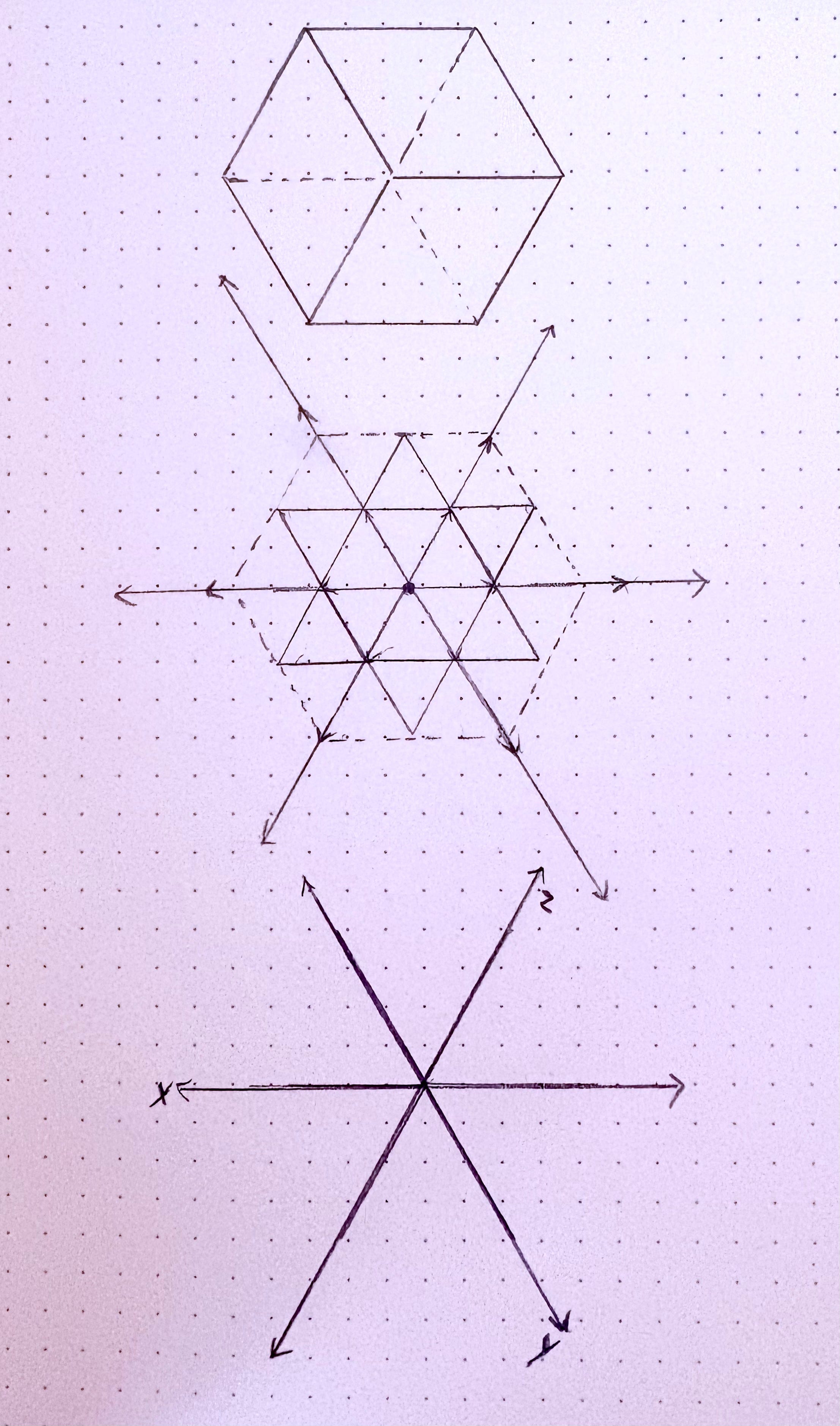
Take a look at this cube.
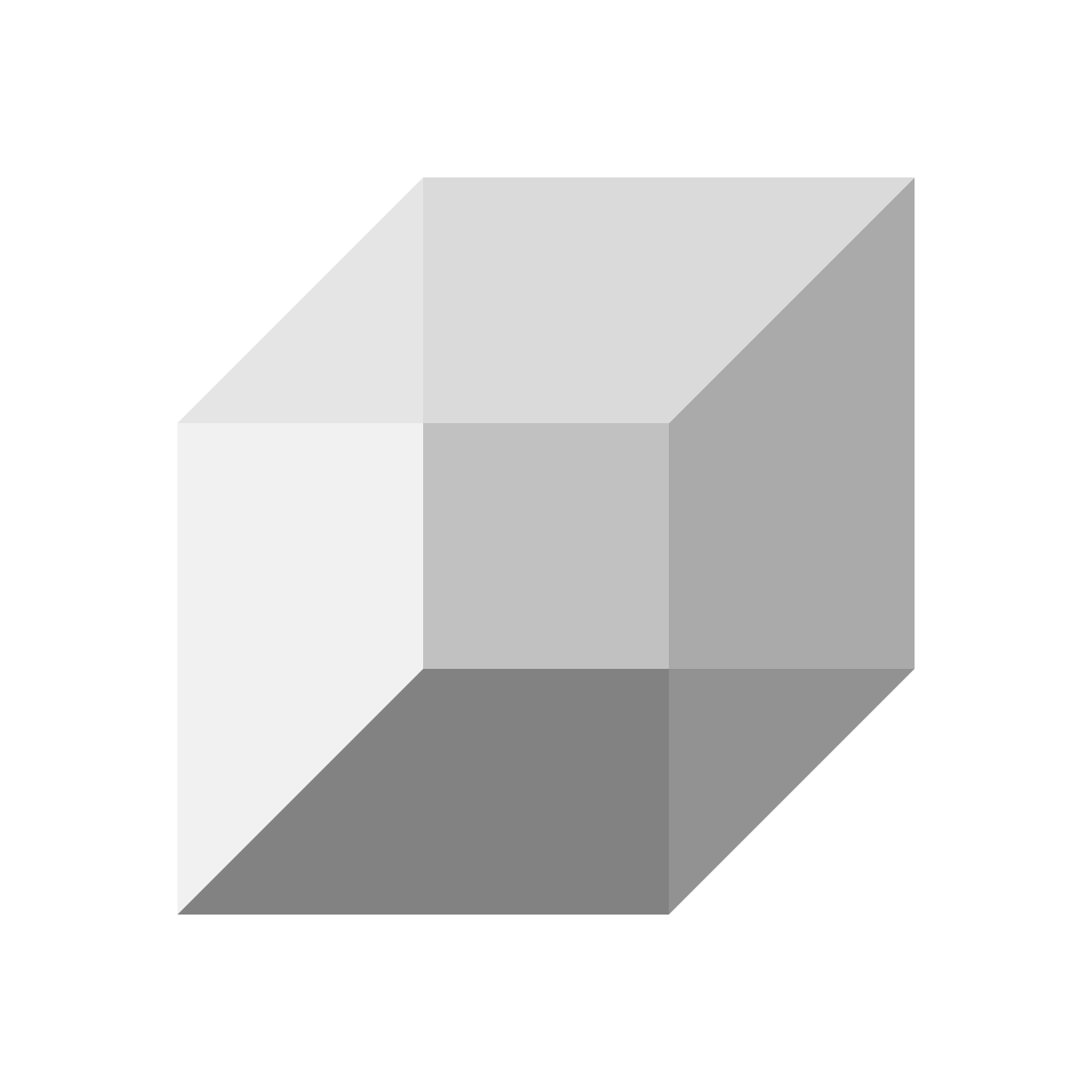
We’ve seen it before (or drawings very similar to it).
A flat drawing of a three-dimensional object. Stare at it and something happens…wait for it… it flips!
The face that was opening toward us suddenly recedes. The whole cube reverses without any change to the lines on the page.
Try to hold both orientations at once.
Got it?
Just kidding. No one can. Our brain picks one and locks. The other disappears until something releases and it flips again.
This is a feature of perception. When we view a flat image containing a rendering of a three-dimensional structure, our brain has to choose an interpretation. Once it chooses, we stop seeing the alternative. We experience our interpretation as the object—until we experience as something else—and so on and so forth.
Keep that in mind.
Now look at the six-pointed star.
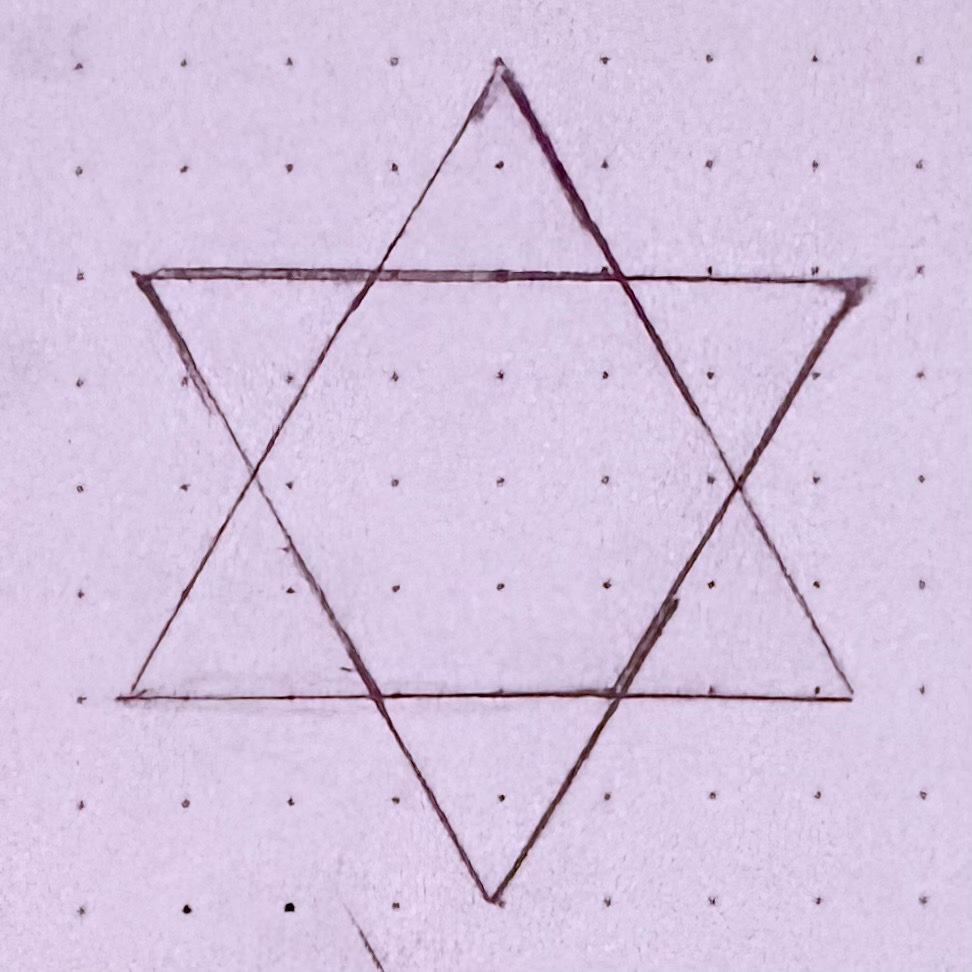
Almost everyone reads it the same way: two triangles. One up, one down. Male and female. Heaven and earth. Fire and water. Spirit descending into matter, matter rising toward spirit.
Always two. Always opposition. The entire symbolic tradition — Hermetic, alchemical, kabbalistic, yogic — builds outward from duality as the foundation.
“As above, so below”
is a polarity statement. The symbol is also known as the Star of David, it is read as a shield forged from the tension between two forces. The Hindu shatkona is Shiva and Shakti interlocked. Every tradition that touches this symbol reads the same structure: two.
The merkaba goes further — it takes the star into three dimensions. Two interlocking tetrahedra, one pointing up, one pointing down. A vehicle of light. A throne. And it gets closer, because at least it’s thinking spatially. But notice what it preserved in the translation: two opposing pyramids. The move from flat to spatial retained the interpretive frame. It gave polarity a new dimension to operate in and count stayed at two.
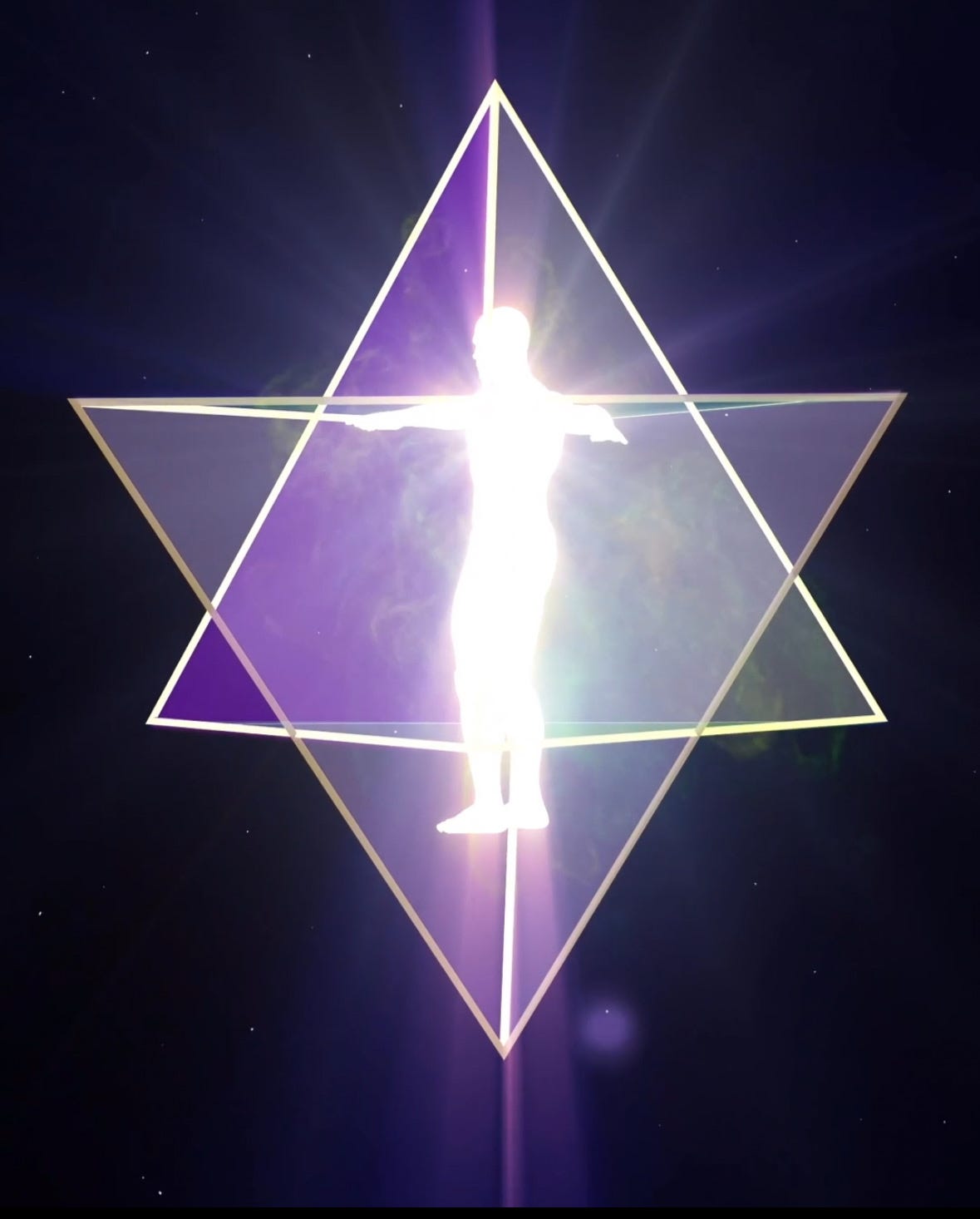
What if that’s the same perceptual lock?
What if we’ve been looking at the thing so long we forgot what made it — stopped seeing what we’re actually looking at and only see the idea superimposed on top of it?
We’ve been reading a three-dimensional structure through a two-dimensional interpretive frame, then building entire cosmologies on the flattened version.
Rotate it. Give it depth.
In three-dimensional space, six equidistant points are produced by three planes intersecting through a shared center— each perpendicular to the others, like the three planes that divide your own body (sagittal, coronal, transverse). Three sheets of glass crossing at equal angles. Where the edges of those planes reach outward, you get six points. Where all three meet, you get one center.
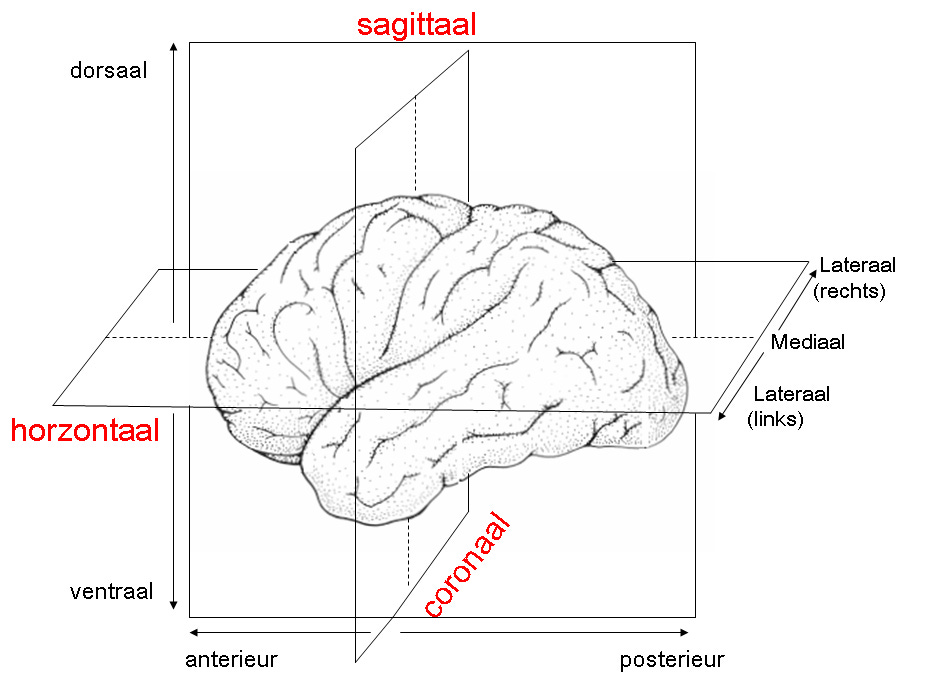
Each plane is a relationship. Each relationship constrains the other two. Plane A can’t shift without changing its angle to Plane B and Plane C. The structure holds because everything in it is accountable to everything else. The geometry is generative through mutual restraint — collaboration, if you will, as opposed to competition.
Now count what three produces.
This is where it gets precise. In crystallography — the science of how matter organizes itself in three-dimensional space — three independent axes produce six parameters: three lengths and three angles. When you enumerate every distinguishable way those parameters can relate to each other under the physical constraints of periodic space, you get exactly seven configurations. Seven crystal systems. Proven exhaustive in 1850. Verified independently multiple times. There is no eighth. The proof is closed.
Three planes. Six points. One center. Seven.
The number that echoes across creation stories, musical scales, days of the week, the double letters of the Hebrew alphabet, and the visible spectrum. It’s what falls out — necessarily — when three mutually constraining relationships are subjected to exhaustive enumeration. Seven is the forced output of three.
Two gives you a line. A tug of war. A binary.
Three gives you a space. A structure. A world.
-----
Sit with what changes if the foundation of one of humanity’s oldest symbols is three — relationship, mutual constraint, accountability — rather than two.
Polarity gives you conflict as the engine of creation. It asks:
Which side are you on?
And it can never resolve. If either side of the pole wins or dominates, the whole thing ceases to be. You’re reduced to three points on a two-dimensional plane — no generative constraints. Flat, lifeless, sterile.
Three asks something different:
What are you holding in place, and what is holding you?
Worth naming: the three is already inside these traditions. Kabbalah has three pillars. Hebrew has three mother letters. Hinduism has three gunas. The triadic structure was there.
What happened is the popular transmission flattened it. The two got amplified. The three got buried. That flattening is exactly the perceptual lock this piece is about.
Yes! 👏